The Art of Not Living in Fear Revisited
The power structure in America has a deep investment in keeping people afraid and begging for protection. We accept that roughly half our federal budget disappears into military-related spending or the interest on debts from previous wars. It’s branded as “defense” spending, as if we live in a constant state of imminent invasion and must outspend the rest of the planet just to sleep at night. When we actually do go to war—like in Iraq and Afghanistan—we rack up debts our grandchildren will still be paying off, with little to show for it besides flag-draped coffins and new veterans’ hospitals.
At home, we tolerate police forces that look and act more like occupying armies. Officers enjoy near immunity for taking civilian lives, especially minority lives. All it takes is the phrase “I feared for my life,” and the system usually nods and moves on. We build prisons with money that could have gone to schools. Politicians—these days mostly Republicans—inflate crime statistics to scare voters, then gut social services to hire more cops and fill more cells.
Fear drives our everyday decisions, too. Americans buy gas-guzzling SUVs because they’ve been convinced smaller cars are death traps. The home alarm industry thrives on selling expensive, easily defeated systems to people who imagine burglars lurking behind every hedgerow. We throw away perfectly good food because a date stamped on a can spooked us. Entire communities now reject vaccines, not because of evidence, but because someone on the internet whispered “poison.”
The formula is simple: the more frightened we are, the more heroic the ruling class gets to look when they promise to save us. Fear justifies bigger police budgets, bigger military budgets, and bigger contracts for the same companies that conveniently fund the next election cycle. It’s a tidy loop—terror in, profits out.
This culture leaks into workplaces as well. Millions of Americans live one bad quarter away from an arbitrary layoff. In non-union jobs, due process barely exists. People hesitate to make decisions because they’re afraid of “getting in trouble.” Entire office cultures revolve around cover-your-ass rituals that protect managers while doing nothing to help customers, coworkers, or the actual mission.
Conservative politics feeds on this anxiety. Those who already have the most—white, Christian, comfortable Americans—are told their way of life is under siege by everyone who doesn’t look or pray like them. Immigrants who pick our food, build our homes, and keep factories running are recast as criminals and freeloaders. It’s easier to blame the guy fixing the roof than the guy who owns the building.
I’m tired of it. I’ve felt real fear—the kind that hits when you genuinely believe someone might hurt you. It’s humiliating and unforgettable, and it can rearrange your life in minutes. After experiencing that, I decided fear would not become my identity. I’m not afraid of immigrants, or terrorists, or imaginary crime waves, or losing a job because I didn’t ask permission to breathe. I refuse to organize my life around panic. I choose to believe we can solve problems with something other than cruise missiles, more prisons, and fewer rights.
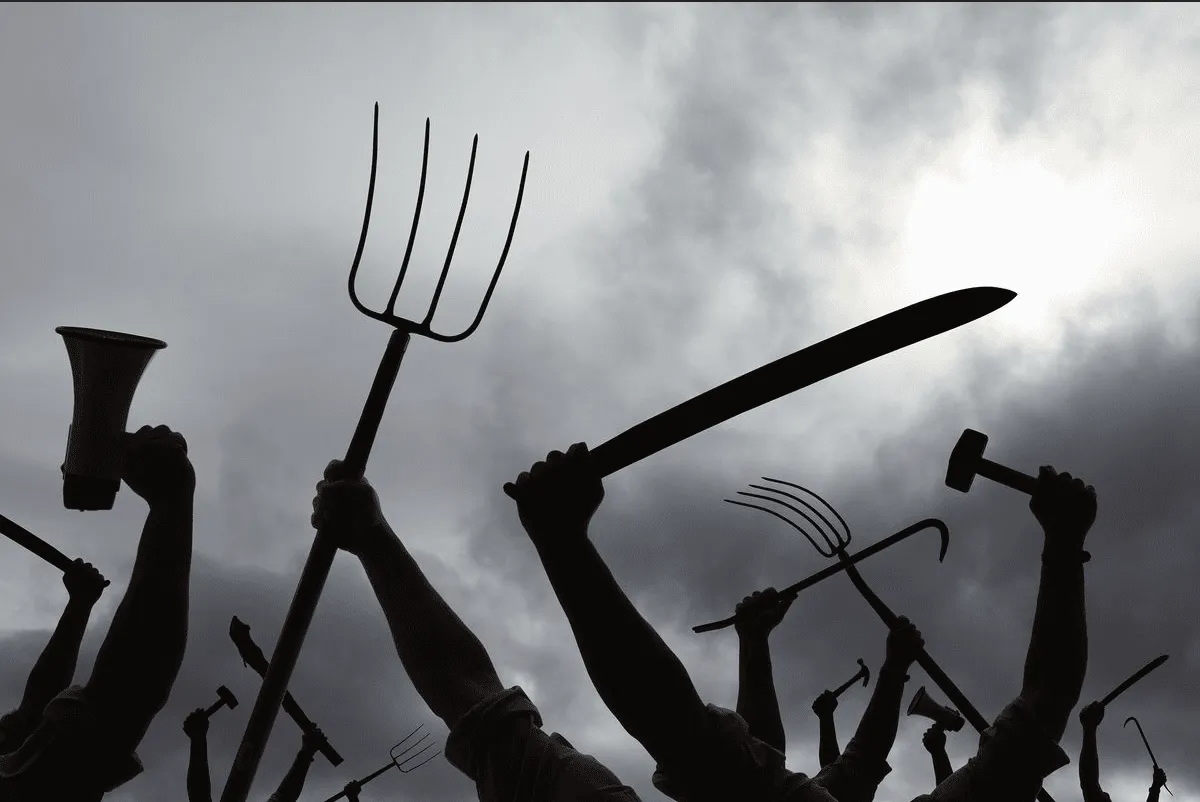
The ruling class should be careful. Scare tactics work for a while, but history is clear about how these stories end. Societies pushed too far eventually push back. When people realize they’ve been kept in a constant state of manufactured dread, the reckoning is rarely polite. A country that lives on fear eventually wakes up angry—and angry nations don’t stay quiet for long.
This is a reworked piece from a couple of years ago, prompted by the current expansion of the police state in the US.
Enjoyed it? Please upvote 👇